

Author ORCID Identifier
Author ORCID Identifier
Cristo Leon
Name: Cristo Leon, PhD in Organizational Leadership
Position: Director of Research, Jordan Hu College of Science & Liberal Arts, Office of Research & Development
Institution: New Jersey Institute of Technology
Address: 323 Martin Luther King Jr. Blvd., Newark, NJ 07102-1982, USA
Email: [email protected]
ORCID: https://orcid.org/0000-0002-0930-0179
Role: First author and corresponding author
Julian Marcone
Name: Julian Marcone
Position: CEO
Institution: Kali Foundation
Address: 11415 Tallinn, Estonia
Email: [email protected]
ORCID: https://orcid.org/0009-0009-6896-7051
Files
Download Full Text (3.0 MB)
Document Type
Article
Description
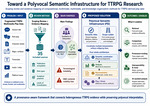
This article presents a scoping review of 35 studies examining multimedia data in tabletop role-playing game (TTRPG) research and proposes a Polyvocal Semantic Infrastructure (PSI) for organizing, connecting, retrieving, and reusing multimodal evidence. The framework emphasizes provenance, interpretive plurality, and future AI-assisted analysis while preserving the contextual richness of TTRPG scholarship.
Publication/Submission Date
9-14-2026
Keywords
Tabletop role-playing game (TTRPG) research increasingly produces complex multimodal and multimedia evidence, including speech, audiovisual recordings, character sheets, maps, platform traces, session notes, game-state data, and retrospective documentation. However, the field lacks a stable methodological infrastructure for organizing, comparing, retrieving, and reusing these heterogeneous forms of play-derived evidence. This article presents a scoping review of computational, multimodal, multimedia, and knowledge-organization approaches used to analyze TTRPG-derived data. The review followed PRISMA-informed transparency practices, used SPIDER to define the review scope, and synthesized 35 included sources through an extraction matrix, a research-question alignment matrix, and keyword co-occurrence analysis. The findings show that TTRPG research is distributed across publication ecosystems, data types, analytical purposes, and levels of formalization. Existing studies use qualitative interpretation, discourse and conversation analysis, player-experience evaluation, structured datasets, natural language processing, named entity recognition, semantic annotation, AI-assisted generation, and controlled vocabularies. However, these approaches remain weakly coordinated across disciplinary vocabularies, data models, and formalization practices. To address this gap, the article proposes a Polyvocal Semantic Infrastructure that responds to a double ontological problem in TTRPG research: the same object is named in multiple ways, and the same term is used for different objects across communities, systems, and disciplines. Operationalized through a semantic atlas and scope ladder, this infrastructure preserves interpretive plurality while supporting comparison, retrieval, provenance tracking, and future AI-assisted analysis of TTRPG-derived Multimedia Play Data.
Disciplines
Arts and Humanities
Creative Commons License

This work is licensed under a Creative Commons Attribution 4.0 International License.
Recommended Citation
Leon, Cristo and Marcone, Julian, "Toward a Polyvocal Semantic Infrastructure for Tabletop Role-Playing Game Research: A Scoping Review of Multimedia Play Data" (2026). STEM for Success Resources. 141.
https://digitalcommons.njit.edu/stemresources/141

Comments
Acknowledgments: The authors would like to acknowledge the review, discussions, and conversa-tions with Rodrigo Santamaría, Marcos O. Cabobianco, and Tamara Pandolfi, whose feedback and interdisciplinary perspectives contributed to the conceptual development of this work. The authors also acknowledge the librarians at the Robert W. Van Houten Library at the New Jersey Institute of Technology for their support in literature access, retrieval, and research consultation. During the preparation of this manuscript, the authors used ChatGPT (version 5.5 Thinking) for language refinement, structural drafting, and conceptual organization. The authors reviewed and edited the output and take full responsibility for the content of this publication.