-
An Animated Introduction to Digital Logic Design, 2nd Edition
John Carpinelli
This book is designed for use in an introductory course on digital logic design, typically offered in computer engineering, electrical engineering, computer science, and other related programs. Such a course is usually offered at the sophomore level. This book makes extensive use of animation to illustrate the flow of data within a digital system and to step through some of the procedures used to design and optimize digital circuits.
This second edition contains:
- Improvements to accessibility
- Typographical corrections
- Updated material on implementing combinatorial functions using multiplexers (Chapter 5)
- Updated materials on IEEE 754 floating point formats (Chapter 1)
- New material on map-entered variables, including end-of-chapter questions (Chapters 2, 5)
-

Engineering Design and Analysis using Creo® CAD, CAE, and Manufacturing Applications
Swapnil Moon
This textbook presents a structured approach to computer-aided design using Creo, integrating CAD, CAE, and CAM workflows within a unified engineering framework. The material emphasizes parametric modeling, design intent, and feature-based modeling as foundations for creating robust and adaptable engineering models. Through progressively structured tutorials, students develop skills in part modeling, assemblies, engineering drawings, mechanism design, simulation, and manufacturing. The text incorporates real-world engineering components and workflows, including structural and thermal analysis, motion simulation, and toolpath generation, reflecting modern engineering practice. Designed for upper-division undergraduate and graduate students, this open educational resource supports hands-on learning and prepares students for industry-relevant digital engineering environments.
-
Introduction to Computer-Aided Design Using SOLIDWORKS® : A Structured Approach to Parametric Modeling and Design Intent
Swapnil Moon
This textbook introduces computer-aided design (CAD) using SOLIDWORKS® through a structured, design-centered approach that emphasizes parametric modeling and engineering reasoning. Rather than focusing solely on software commands, the material develops foundational skills in design intent, constraint-based modeling, and feature relationships to create robust, adaptable models.
The content is organized progressively, beginning with basic sketching and feature creation and advancing to complex part modeling, assemblies, motion studies, and engineering drawings. Each chapter builds upon prior concepts, reinforcing systematic modeling practices and promoting the development of system-level thinking required in real-world engineering design workflows.
Designed for undergraduate students with little or no prior CAD experience, the textbook supports active, hands-on learning through step-by-step modeling exercises. In addition to technical modeling skills, students learn to translate design requirements into parametric representations, evaluate how modeling decisions affect downstream features, and communicate designs effectively through structured documentation.
This resource is published as an Open Educational Resource (OER) to promote accessibility, adaptability, and continuous improvement in engineering education. It is suitable for introductory CAD and engineering design courses and may be adapted by instructors to support a range of curricula in mechanical and related engineering disciplines.
-
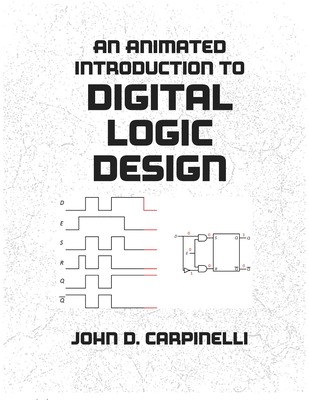
An Animated Introduction to Digital Logic Design
John D. Carpinelli
There is a newer edition of this textbook available here.
This book is designed for use in an introductory course on digital logic design, typically offered in computer engineering, electrical engineering, computer science, and other related programs. Such a course is usually offered at the sophomore level. This book makes extensive use of animation to illustrate the flow of data within a digital system and to step through some of the procedures used to design and optimize digital circuits.
All of the animations for this book can be found here: https://digitalcommons.njit.edu/dld-animations/
Printing is not supported at the primary Gallery Thumbnail page. Please first navigate to a specific Image before printing.